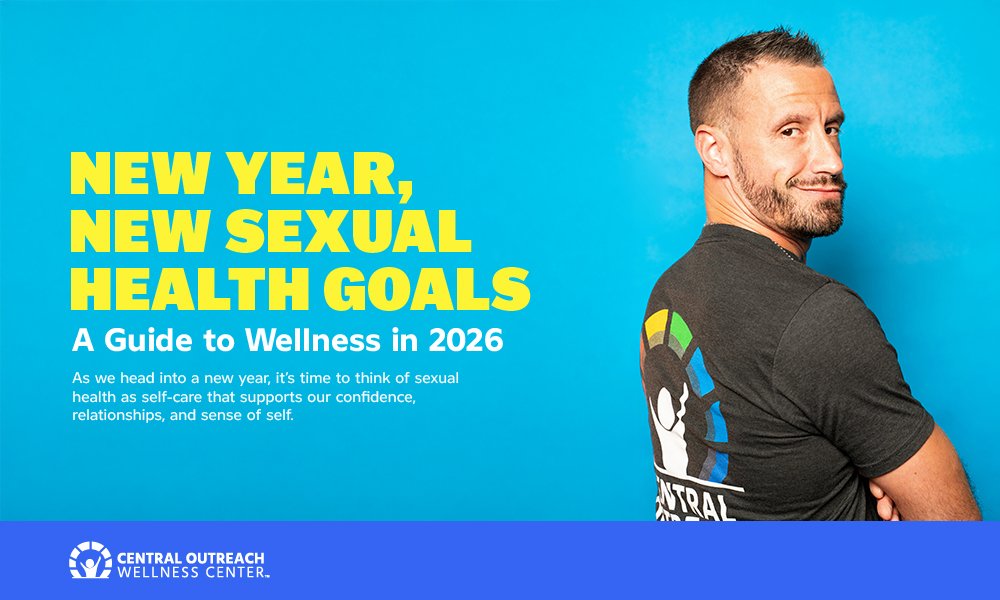
As we kick off a new year, many of us think about resolutions, but how often do we make goals for our sexual health? Sexual health is an essential part of overall well-being. It affects our relationships, our confidence, and our sense of self.
This year, let’s treat sexual health as self-care, not something separate from the rest of your physical or mental wellness.
1. Get Regular STI & HIV Testing
Routine testing is one of the most proactive steps you can take for your sexual health. Getting tested:
- Detects infections early when they’re easiest to treat
- Helps prevent transmission to partners
- Gives you peace of mind and data to guide safer sex decisions
Goal Example: Schedule your next STI/HIV test at least every 3–6 months if you’re sexually active, or as recommended by your provider.
“Some bacterial STI’s, especially gonorrhea and chlamydia, are more often asymptomatic than symptomatic, so knowing your body isn’t enough. Trust testing, not vibes.” -Jared, PA-C
Fun fact: Many people with STIs don’t have symptoms, so testing is the only way to know.
2. Explore Prevention Tools Like PrEP & DOXY-PEP
Prevention changes the game. Two helpful medical tools include:
PrEP (Pre-Exposure Prophylaxis): A medication that can reduce your risk of HIV by over 99% when taken as prescribed. Comes in pill or injection form.
DOXY-PEP (Doxycycline Post-Exposure Prophylaxis): A newer strategy taken after sex to help prevent certain bacterial STIs like chlamydia, gonorrhea, and syphilis.
“Cover your back after you arch it. Because doxy-PEP isn’t foolproof, getting tested regularly is as important as taking the medication..” -Jared, PA-C
Goal Example: Talk to your provider this year about whether PrEP or DOXY-PEP is right for you.
“Educational pillow talk can be sexy! Talk to your partners about PrEP and Doxy-PEP and send them to us to see if it’s right for them.” -Anelise, CRNP
3. Get to Know Your Body & Pleasure
Sexual wellness isn’t just disease prevention; it’s also about pleasure, comfort, and consent. Knowing your body helps you communicate what feels good and what doesn’t. It improves experiences with yourself and with partners.
Goal Example: Spend time exploring what makes you feel comfortable, confident, and connected, and share this with partners as part of healthy communication.
“You deserve sex that feels good AND is safe. Come chat with us!” - Lily, PA-C
4. Practice Consent Every Time
Consent isn’t a one-time checkbox; it’s an ongoing conversation. It’s about respect, clarity, and mutual understanding.
Healthy consent means:
- Everyone involved can actively agree
- Consent can change at any time
- Saying “no” or “stop” is always okay
- Enthusiastic, clear agreement matters
Goal Example: Make it a habit to talk about boundaries before intimate moments, not awkward, but empowering.
5. Build Communication Skills With Partners
Communication is a cornerstone of pleasure and safety. This year, focus on honest conversations about:
- Boundaries & consent
- STI/HIV testing history
- Prevention preferences (e.g., PrEP, condoms)
- Desires and comfort levels
Goal Example: Try “check-in” conversations with partners before and after sex to build trust and understanding.
6. Prioritize Emotional & Mental Sexual Health
Sexual health isn’t just physical; it intersects with identity, confidence, relationships, and mental well-being. Shame, stigma, and trauma can impact sexual experiences. Taking care of your mind is sexual wellness, too.
Goal Example: If past experiences or anxiety affect your sexual enjoyment, consider connecting with a therapist or support group.
Central Outreach offers affirming mental health support tailored to LGBTQ+ folks.
“Anxiety around sex is more common than you think, and can be attributed to a variety of underlying issues. We are here to help you get to the root cause.” - Anelise, CRNP
“No shame. No judgment. Just care!” - Lily PA-C
7. Advocate for Inclusive, Affirming Care
Everyone deserves health care that respects their identity, no matter your gender, sexual orientation, or body. This year, be your own advocate in healthcare spaces. Ask for what you need. Clarify pronouns. Set the tone for respectful care.
Goal Example: Update your patient profile with pronouns, sexual orientation, and gender identity, and expect affirming language from providers.
8. Make Testing & Preventive Care Part of Your Routine
Instead of thinking of sexual health as “one moment,” make it part of your health rhythm. Just like dental cleanings or routine checkups, sexual health deserves regular attention.
Goal Example: Add STI/HIV screening, PrEP discussions, or sexual wellness check-ins to your calendar this year.
A Checklist for Your Sexual Health Goals for 2026
Here’s a starter list you can use:
✔️ Get tested (HIV & STIs)
✔️ Explore PrEP or DOXY-PEP with a provider
✔️ Practice consent consistently
✔️ Communicate openly with partners
✔️ Learn more about your pleasure & boundaries
✔️ Prioritize mental and emotional sexual health
✔️ Seek affirming care from providers
✔️ Build sexual health into your wellness routine
A Year of Sexual Well-Being Starts With You
Setting goals around sexual health isn’t about pressure; it’s about empowerment. It’s about owning your pleasure, celebrating your identity, and caring for your health the same way you would your heart, skin, or mind.
Central Outreach is here with you for testing, education, prevention, counseling, and care that sees all of you.
Let’s make 2026 a year of health, pleasure, connection, and confidence.
Sources
- Centers for Disease Control and Prevention (CDC). “Recommendations for HIV Screening of Gay, Bisexual, and Other Men Who Have Sex with Men.”
- CDC. “STD Trends in the United States.”
- CDC. “Pre-Exposure Prophylaxis (PrEP).”
- DoxyPEP Guidelines (New Prevention Strategy for Bacterial STIs). NEJM.
